
Keynotes
The ICPADS 2025 Organizing Committee is excited to announce the following keynote speakers.
Prof. Qiang Yang
Hong Kong Polytechnic University, Hong Kong, China
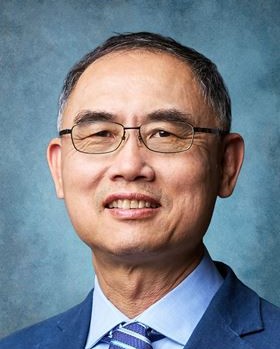
Keynote Title: Future AI Challenges and Solutions by Federated Learning
Keynote Abstract: With the development of large Artificial Intelligence (AI) models, AI has entered a new era. One challenge in the practical application of large models is how to transfer the knowledge of general-purpose large models to localized small models while protecting the privacy and data security of all parties. In this talk, I will first explore several challenges faced by large AI models, then discuss how to use the "Federated LLM " framework to provide some solutions.
Bio: Professor Qiang Yang is a Fellow of the Canadian Academy of Engineering (CAE) and the Royal Society of Canada (RSC), Director of Hong Kong PolyU Academy for AI, and Vice President of the Chinese Association for Artificial Intelligence (CAAI). He is also a Fellow of CAAI, AAAI, ACM, IEEE and AAAS. He was the founding EiC of top international journals ACM Transactions on Intelligent Systems and Technology (ACM TIST) and IEEE Transactions on Big Data. His research focuses are the study and application of Transfer Learning, Federated Learning and AI Planning. His latest books are 《Transfer Learning》, 《Federated Learning》, 《Privacy-preserving Computing》,《AI Model Watermarks》, etc. Professor Yang is a Professor Emeritus of Hong Kong University of Science and Technology and the Chief AI Officer Emeritus of WeBank. He has also been conference or program chairs for IJCAI and AAAI. He has been honored with the 2017 ACM SIGKDD Distinguished Service Award and the 2023 IJCAI Donald E. Walker Distinguished Service Award.
Prof. Jie Wu
China Telecom, China; Temple University, USA
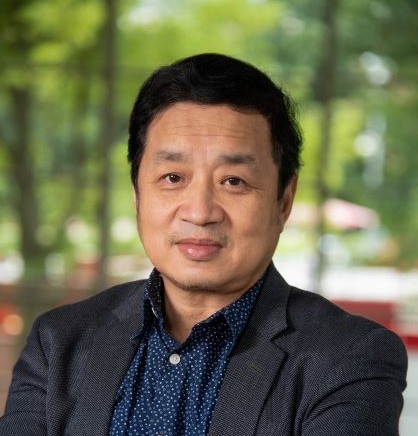
Keynote Title: On Joint VM and Bandwidth Scheduling in a DCN
Keynote Abstract: The joint allocation of virtual machines (VMs) to servers and network bandwidth has long been major challenges in data center networks (DCNs). The hose model was introduced to simplify VM and network bandwidth allocation without requiring pairwise traffic demands between VMs, as needed in the pipe model. In Oktopus, a virtual cluster VC(N, B) can be quickly constructed to guarantee a bandwidth B between N VMs under the hose model. A more recent approach, Elastic, defines VC(−, B), where − corresponds to the maximum number of VMs the current DCN can support. In this way, Elastic determines the largest slice, called the max C (for the cluster), and supports scheduling that offers maximum elasticity for future VM growth through a scaling-down approach. In this talk, we introduce a new approach, called Tailor, which is based on Elastic. Tailor first applies Elastic to generate the max C, and then subsequent VC requests are tailored and cut from this max C. Tailor also incorporates garbage collection after a sequence of releases and before constructing the next maximum VC. Comparisons in both simulation and testbed DCN show that Tailor outperforms Oktopus in terms of total execution time.
Bio: Jie Wu is the Laura H. Carnell Professor at Temple University and the Director of the Center for Networked Computing (CNC). He served as Chair of the Department of Computer and Information Sciences from 2009 to 2016 and as Associate Vice Provost for International Affairs from 2015 to 2017. Before joining Temple University, he was a Program Director at the National Science Foundation and a Distinguished Professor at Florida Atlantic University. His current research interests include mobile computing and wireless networks, routing protocols, network trust and security, distributed algorithms, applied machine learning, and cloud computing. Dr. Wu has published extensively in scholarly journals, conference proceedings, and books, and serves on several editorial boards, including IEEE/ACM Transactions on Networking. He has served as General Chair or Co-Chair for IEEE IPDPS 2023, ACM MobiHoc 2023, and IEEE CCGrid 2024, and as Program Chair or Co-Chair for IEEE INFOCOM 2011, CCF CNCC 2013, and ICCCN 2020. He also chaired the IEEE Technical Committee on Distributed Processing (TCDP). Dr. Wu is a Fellow of the AAAS and IEEE and a Member of Academia Europaea (MAE). He is currently the Chief Scientist and Director of the Cloud Computing Research Institute at China Telecom.
Prof. Jiangchuan Liu
Simon Fraser University, Canada
Keynote Title: Networked Multimedia Data Analytics in Challenging Environments: Experiences and Solutions
Keynote Abstract: Online multimedia data analytics over wide-area networks have found diverse applications, including environmental monitoring, industrial automation, and autonomous systems, to name a few. In this talk, drawing from our recent research and development experiences in challenging environments, we will discuss our work on algorithm and system design in this field, including video and sonar analytics at the edge, serverless-based pipeline optimization, and streaming analytics over space networks. We will also explore the challenges and solutions related to real-world deployment, with a focus on remote ecosystems for wild salmon conservation along the Pacific Northwest coastline.
Bio: Jiangchuan Liu (S'01-M'03-SM'08-F'17) is a Professor in the School of Computing Science, Simon Fraser University, British Columbia, Canada. He is a Fellow of Royal Society of Canada, a Fellow of The Canadian Academy of Engineering, an IEEE Fellow, and an NSERC E.W.R. Steacie Memorial Fellow. He was an EMC-Endowed Visiting Chair Professor of Tsinghua University (2013-2016) and is a Distinguished Guest Professor of Tsinghua Shenzhen International Graduate School (2022-). In the past he worked as an Assistant Professor at The Chinese University of Hong Kong and as a research fellow at Microsoft Research Asia.He received the BEng degree (cum laude) from Tsinghua University in 1999, and the PhD degree from The Hong Kong University of Science and Technology in 2003, both in computer science. He is a co-recipient of the inaugural Test of Time Paper Award of IEEE INFOCOM (2015), IEEE ICDCS Distinguished Paper Award (2024), ACM SIGMM TOMCCAP Nicolas D. Georganas Best Paper Award (2013), and ACM Multimedia Best Paper Award (2012). His research interests include multimedia systems and networks, cloud and edge computing, social networking, online gaming, mobile and space networking. He has served on the editorial boards of IEEE/ACM TON, IEEE TNSE, TMM, TBD, COMST, and IOTJ. He was a Steering Committee member of IEEE TMobile, and Steering Committee Chair of IEEE/ACM IWQoS (2015-2017). He was TPC Chair of IEEE INFOCOM'2021 and General Chair of INFOCOM’2024.
Prof. Laurence Tianruo Yang
Zhengzhou University, China
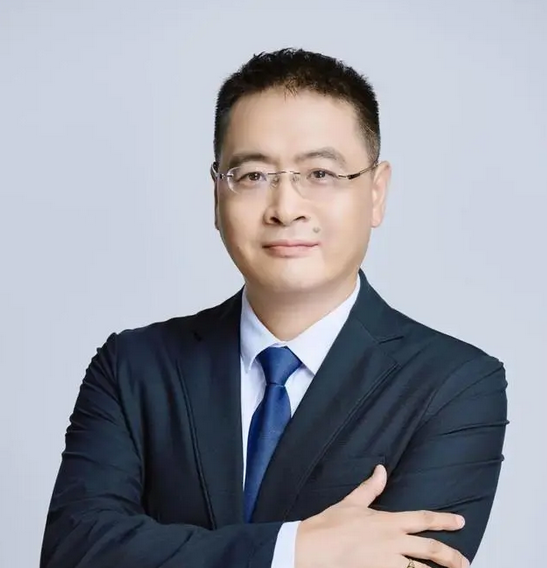
Keynote Title: Cyber-Physical-Social Intelligence
Keynote Abstract: The booming growth and rapid development in embedded systems, wireless communications, sensing techniques and emerging support for cloud computing and social networks have enabled researchers and practitioners to create a wide variety of Cyber-Physical-Social Systems (CPSS) that reason intelligently, act autonomously, and respond to the users’ needs in a context and situation-aware manner, namely Cyber-Physical-Social Intelligence. It is the integration of computation, communication and control with the physical world, human knowledge and sociocultural elements. It is a novel emerging computing paradigm and has attracted wide concerns from both industry and academia in recent years. This talk will present our latest research on Cyber-Physical-Social Intelligence. Corresponding case studies in some typical applications will be shown to demonstrate the feasibility and flexibility.
Bio: Laurence T. Yang got his BE in Computer Science and Technology and BSc in Applied Physics both from Tsinghua University, China and Ph.D in Computer Science from University of Victoria, Canada. He is the Academic Vice-President and Dean of School of Computer Science and Artificial Intelligence, Zhengzhou University, China. His research includes Cyber-Physical-Social Intelligence. He has published 600+ papers in the above area on top IEEE/ACM Transactions with total citations of 46000+ and H-index of 109 including 8 and 44 papers as top 0.1% and top 1% highly cited ESI papers, respectively. His recent honors and awards include the member of US National Academy of Artificial Intelligence (2025) and a member of Academia Europaea, the Academy of Europe (2021), the John B. Stirling Medal (2021) from Engineering Institute of Canada, IEEE Sensor Council Technical Achievement Award (2020), IEEE Canada C. C. Gotlieb Computer Medal (2020), Clarivate Analytics (Web of Science Group) Highly Cited Researcher (2019, 2020, 2022, 2023, 2024, 2025), Fellow of Institution of Engineering and Technology (2020), Fellow of Institute of Electrical and Electronics Engineers (2020), Fellow of Engineering Institute of Canada (2019), Fellow of Canadian Academy of Engineering (2017), etc.
Prof. Yanyong Zhang
University of Science and Technology of China, China

Keynote Title: Sensing with Millimeter-Wave Radar
Keynote Abstract: Millimeter-wave (mmWave) radar offers compelling advantages over other sensing modalities, including all-weather/all-day operation, direct velocity measurement, strong penetration capability, and inherent privacy preservation. Leveraging these benefits, our research explores various perception tasks implemented across different data representations, such as raw signals, heatmaps, and point clouds. This presentation will detail our recent advancements in mmWave radar sensing tailored for autonomous driving and smart home applications, covering topics from robust on-vehicle and roadside sensing to fine-grained human-centric perception.
Bio: Yanyong obtained her B.S. from USTC in 1997, and her Ph.D. from Penn State in 2002, both in Computer Science. In July 2002, she joined the Electrical and Computer Engineering Department and Winlab at Rutgers University as an Assistant Professor. She was promoted to an Associate Professor with tensure in 2008, and a Professor in 2015. In July 2018, she moved back to her alma mater -- School of Computer Science at USTC. She has served on many organization committees sand TPC committees for international conferences. In the year of 2022, she serves as the TPC co-chair for ACM/IEEE IPSN. She has served as the Associate Editor for the following journals: IEEE TCC (cloud computing), IEEE TDSC, IEEE/ACM ToN, IEEE TMC, IEEE TSC, and Elsevier Smart Health. She is the winner of ACM Mobicom 2021 Best Paper Runner-Up Award.
Prof. Wei Zhang
The University of New South Wales, Australia
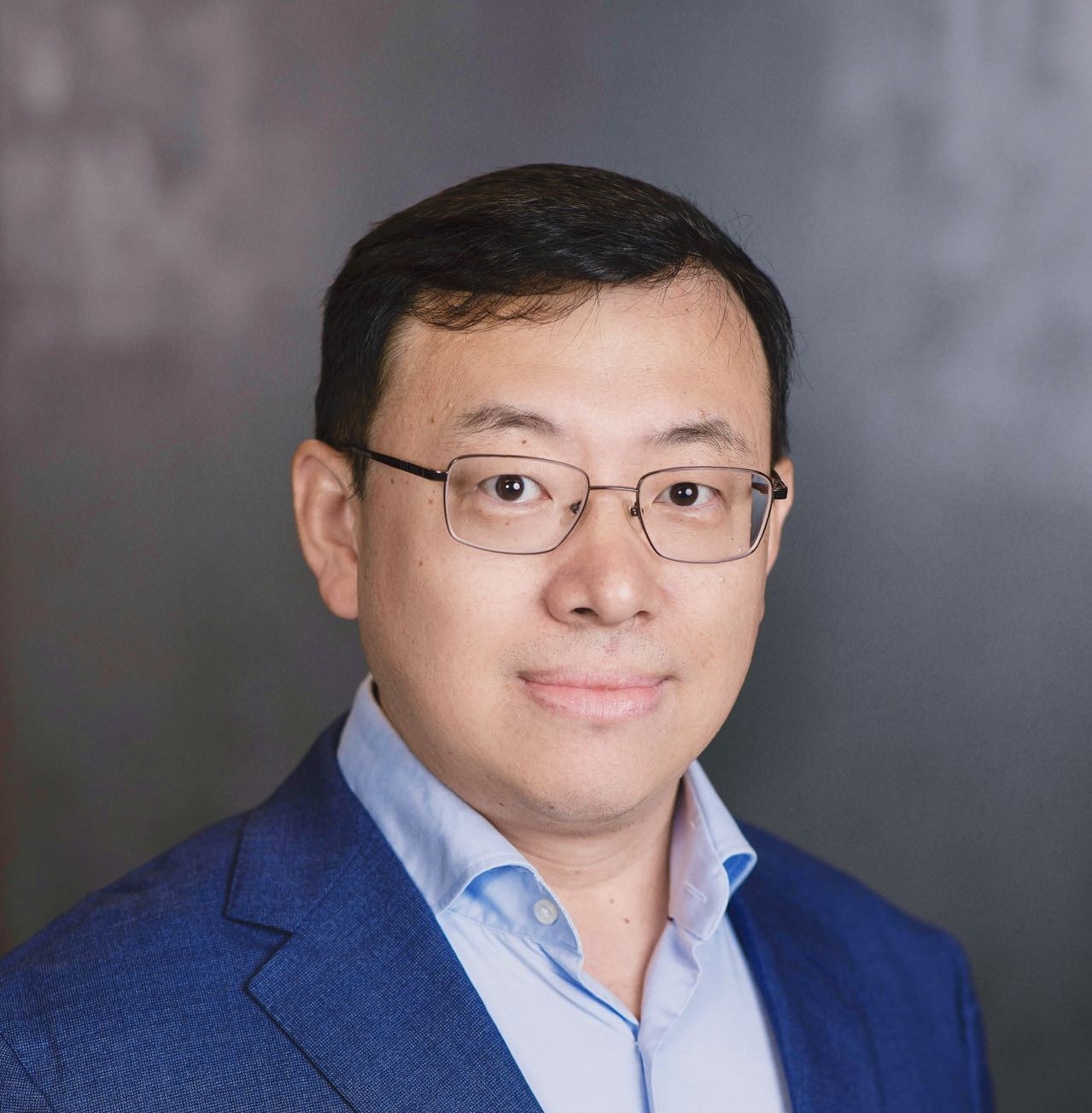
Keynote Title: AI-Powered Radio Maps for Low-Altitude Economy
Keynote Abstract: The low-altitude economy (LAE), driven by drones (UAVs), is transforming industries like delivery, surveillance, and smart cities. However, maintaining stable wireless connections for fast-moving drones remains a critical hurdle. To address this, we propose an AI-enhanced solution that builds dynamic radio maps to predict and optimize signal strength in real time. Our approach begins by collecting wireless signal data across drone flight paths, then uses a novel deep learning model (CVCGAN) to generate continuous, high-accuracy predictions of signal quality, even in unmapped areas. By intelligently merging these AI-powered maps with real-time pilot signals, we achieve seamless connectivity that outperforms current methods. This breakthrough not only ensures reliable drone operations but also accelerates the potential of LAE applications, showcasing how AI can bridge the gap between mobility and robust wireless communication.
Bio: Wei Zhang (F’15) is a professor at the University of New South Wales, Sydney, Australia. He has been Vice President of IEEE Communications Society since 2022. His research interests include 6G communications and networks. He has been an IEEE Fellow since 2015 and was an IEEE ComSoc Distinguished Lecturer in 2016-2017. Within the IEEE ComSoc, he has taken many leadership positions including Chair of Wireless Communications Technical Committee (2019-2020), Vice Director of Asia Pacific Board (2016-2021), Editor-in-Chief of IEEE Wireless Communications Letters (2016-2019), Member-at-Large on the Board of Governors (2018-2020), Technical Program Committee Chair of APCC 2017 and ICCC 2019 and 2024, Award Committee Chair of Asia Pacific Board and Award Committee Chair of Technical Committee on Cognitive Networks. He received the IEEE Communications Society Joseph LoCicero Award in 2024. He obtained the Ph.D. degree from the Chinese University of Hong Kong in 2005.
Prof. Chengzhong Xu
University of Macau, Macao SAR, China
Keynote Title: Robust Autonomous Driving in Mixed Traffic
Keynote Abstract: Autonomous driving is transitioning into a mature phase focused on robustness, leveraging cognitive edge AI technologies. This talk will first discuss the challenges for robust autonomous driving in mixed traffic where self-driving and human driving vehicles co-exist. It will then introduce University of Macau’s MoCAD project, which develops core enabling technologies for robust autonomous driving in open and complex environments. Topics of generated AI for creating robust scenarios and world models for end-to-end driving simulation will be presented. Occupant emotional states and surrounding traffic behavior will also be discussed, as self-driving vehicles become moving robots on the road.
Bio: Dr. Cheng-Zhong Xu is a Chair Professor of Computer Science and the Dean of the Faculty of Science and Technology, University of Macau. He served as Chief Scientist for key national projects on “Internet of Things for Smart City” (Ministry of Science and Technology of China) and “Intelligent Driving” (Macau SAR, China). He was also Director of Institute of Advanced Computing and Digital Engineering at the Shenzhen Institutes of Advanced Technology (SIAT), Chinese Academy of Sciences. Before these roles, he spent over 18 years as a faculty member at Wayne State University, USA. Dr. Xu's research focuses on parallel and distributed systems, cloud computing, intelligent driving and smart city applications. He has published over 600 papers and held more than 150 patents. His work has garnered over 24000 citations and has been cited in 340+ international patents, including 240 U.S. patents. Dr. Xu chaired IEEE Technical Committee of Distributed Processing from 2014 to 2020. He earned his B.S. and M.S. in Computer Science from Nanjing University and his Ph.D. from the University of Hong Kong in 1993. He is an IEEE fellow, due to contributions in resource management in parallel and distributed systems.
Prof. Yunhuai Liu
Peking University, China

Keynote Title: Metal Large Deformation Computations for Industry IOT
Keynote Abstract: The modeling, simulation, and scientific computation of complex physical processes, especially the continuum mechanics, are fundamental issues in the field of engineering technology, ranging from metal processing, aerospace, to materials science. Traditional numerical computation methods are mainly based on finite element and finite difference methods, and are limited by the computational accuracy and efficiency due to the discretization process. In this talk, we introduce some of our recent results in the computation of large deformations of metal crystals, especially data-driven methods without constitutive equations or numerical solutions. Compared with traditional solving methods, our methods improved computational efficiency by 4-6 orders of magnitude under the same solution accuracy.
Bio: Dr. Yunhuai Liu is now a professor with Peking University, P.R. China. He received his B.E in Computer Science from Tsinghua University, and PhD degree in Computer Science and Engineering from Hong Kong University of Science and Technology in 2008. In the year 2010, he joined Shenzhen Institutes of Advanced Technology, Chinese Academy of Sciences. From 2011 to 2016, he was with the Third Research Institute of Ministry of Public Security, China. He is the receipt of National Distinguish Young Scientists Foundation, and National Talented Young Scholar program. He received the third-class personal medal of Ministry of Public Security. He is now serves as the Vice chair of ACM China Council, and served as the Associate Editor for IEEE TPDS, IEEE TNSE, and TPC members of ACM Sensys, IEEE INFOCOM and etc. He received the Outstanding Paper Award at the 28th IEEE ICDCS, the 25th SANER, the 63rd ACL, and the 34th CIKM. He has published over 180 peer-reviewed technical papers with over 5800 citations (google scholar).